
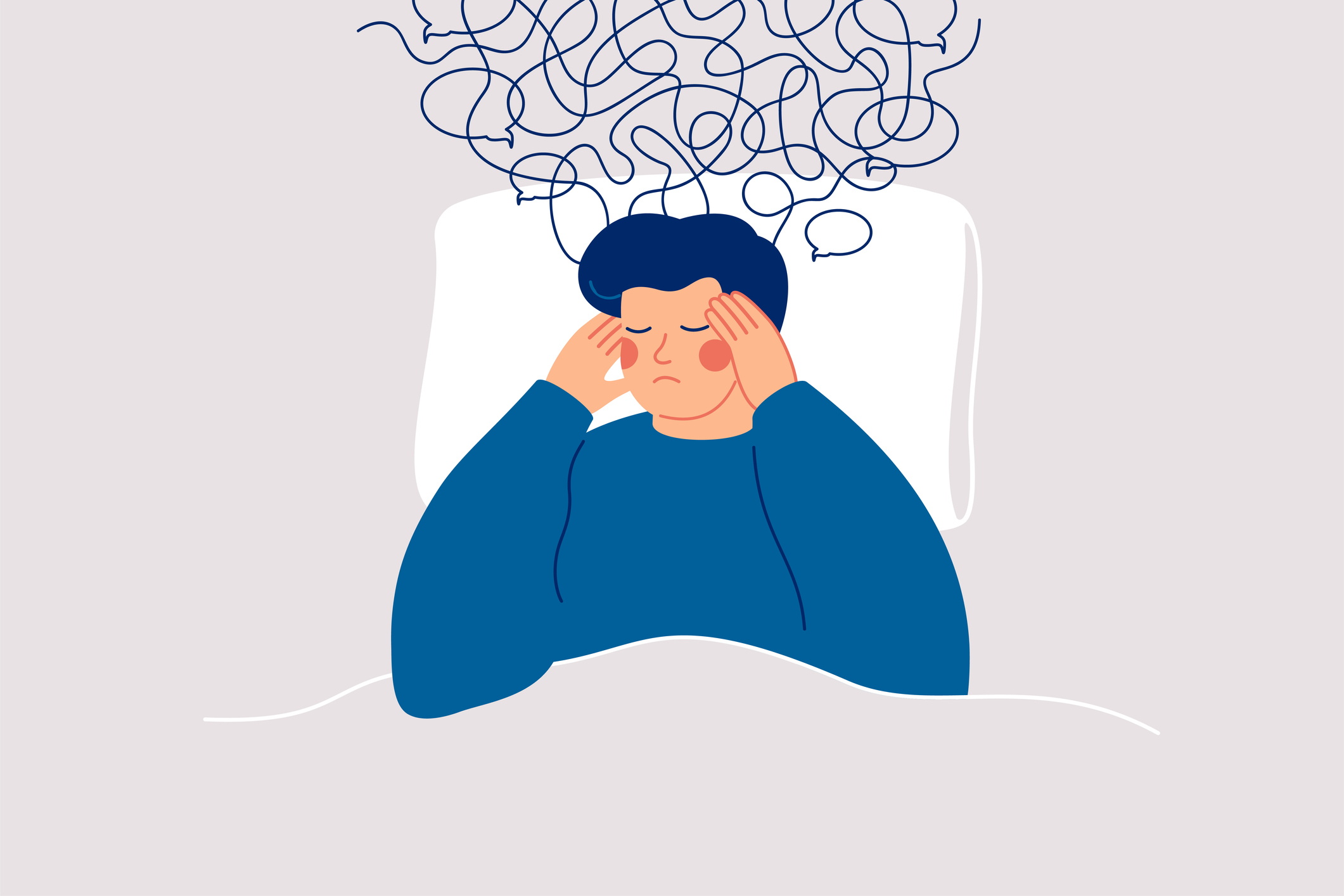
Intrusive thoughts rarely feel like random mental noise. They feel like accusations. Like your mind is holding up a piece of “evidence” and demanding a verdict:
“Explain this.”
“Prove you’re safe.”
“Prove you’re a good person.”
“Make sure this doesn’t mean something.”
And suddenly you’re not living your day—you’re stuck in an inner courtroom.
You become the defendant, the prosecutor, the judge… and the jury. You replay memories to check your intent. You examine your feelings for clues. You look for certainty like it’s the only way to relax. And the case never closes—because intrusive thoughts always find a new angle.
Why the courtroom never works
The mind is not asking questions to learn. It’s asking questions to keep you engaged.
Every time you put the thought on trial—arguing, analyzing, neutralizing, checking—you send your brain one message:
“This thought matters.”
So the brain does what brains do: it produces more “important” thoughts.
That’s why the loop feels endless. Not because you’re broken. Because you’re feeding the very mechanism that keeps it alive.
The shift: from “verdict-seeking” to “authority removal”
You don’t need a verdict to be free. You need to stop treating thoughts like they have authority.
Here’s the key line:
A thought is not a charge. It’s a mental appearance.
It can be loud. It can be disturbing. It can feel urgent. But it’s still just mind activity.
So instead of answering the courtroom, you exit it.
The Exit Script (use this exact sequence)
When the courtroom starts, use this 5-step exit. Keep it simple.
- Name it: “Courtroom.”
(This is huge. It stops the hypnosis.) - Tag it: “Fake thought.” / “Mind projection.”
- No conflict: don’t debate, don’t prove, don’t reassure.
If you feel pulled to argue, say: “Not engaging.” - Drop: “No obligation.”
You don’t owe the mind an answer. - Return: do one real action now.
Life is the anchor. The mind weakens when you return to living.
If the mind says, “But what if…?” you reply with the same line:
“No obligation.”
Then return again.
What if the feeling is intense?
This is where many people get tricked: the thought feels real because the body is activated.
But feelings don’t prove truth. They prove activation.
So add this sentence when needed:
“Feeling is allowed. Thought is not a command.”
You can feel uncomfortable and still refuse to engage. That’s the skill.
What not to do (even if it feels helpful)
- Don’t do reassurance rituals. (They teach the brain the thought is important.)
- Don’t replace the thought with a “positive thought.” (That’s still arguing.)
- Don’t try to force the mind to shut up. (Forcing is still conflict.)
Your goal isn’t mental perfection. It’s non-participation.
Make the practice easier: reduce fear fuel
While you’re retraining your mind, protect your nervous system. Fear-content keeps the courtroom busy.
A simple rule that speeds progress:
No news. No newspapers. No doomscrolling.
You’re not ignoring life. You’re refusing to pour gasoline on anxiety while you learn freedom.
The result you’re aiming for
Progress isn’t “never having intrusive thoughts.”
Progress is:
- less urgency
- less time lost
- faster recovery
- less fear of the thoughts themselves
- more life lived outside your head
Intrusive thoughts only control you when you treat them like a case that must be solved. So stop holding trials.
Exit the courtroom.
Drop the demand for certainty.
Return to life.
Educational only, not medical care. If you feel unsafe or overwhelmed, reach out to a licensed professional and a trusted person in your life.