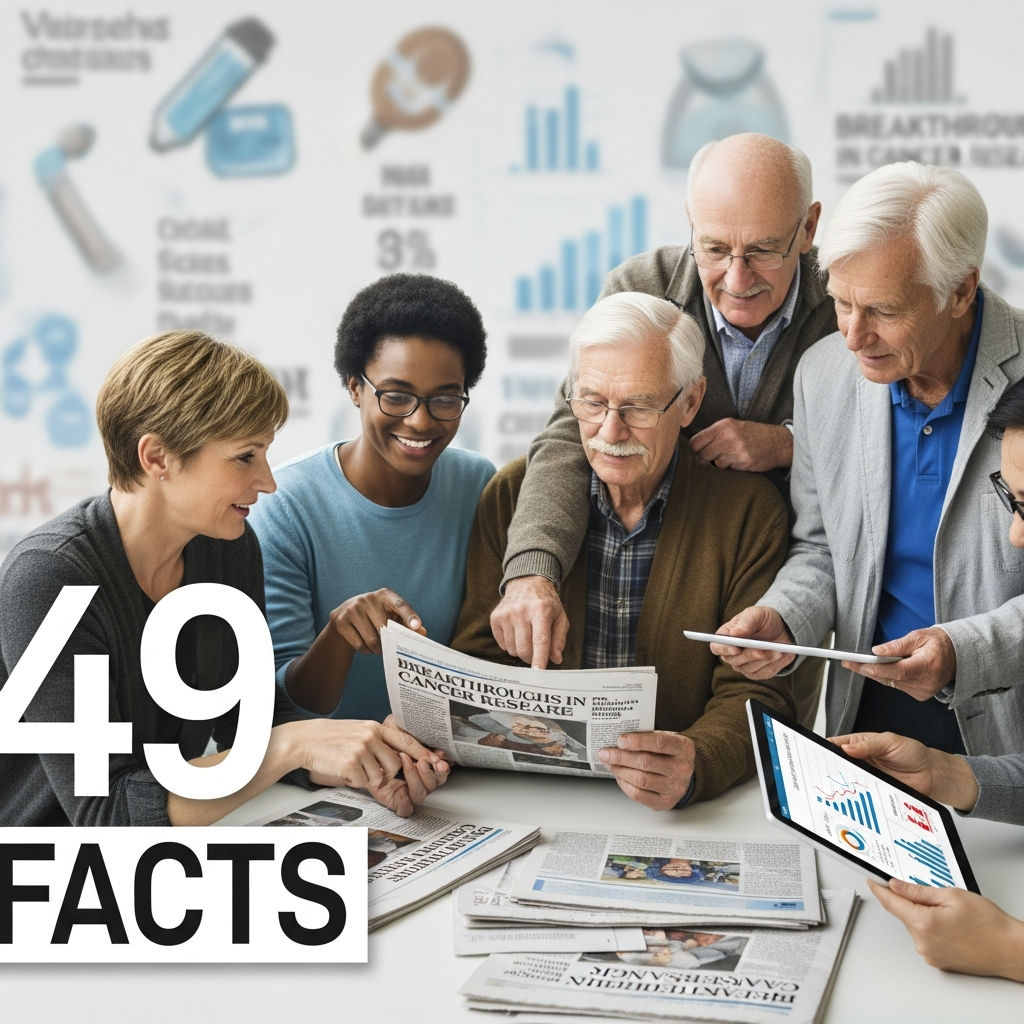
Is Health News Still Relevant? 49 Facts You Need to Know
In an era dominated by viral TikTok trends, AI-generated medical advice, and a constant barrage of conflicting studies, many people wonder: Is health news still relevant? With a simple search providing millions of results for any symptom, the traditional role of medical journalism is under scrutiny. However, as the landscape of information evolves, the need for credible, evidence-based reporting has never been higher.
Whether you are a healthcare professional, a patient, or someone simply looking to live a longer life, understanding the current state of health media is crucial. Below, we explore 49 facts that highlight the relevance, challenges, and future of health news in the 21st century.
The Digital Shift in Health Consumption
The way we consume health news has fundamentally shifted from morning newspapers to real-time digital updates. These facts highlight how we interact with medical information today.
- 1. Approximately 7% of Google’s daily searches are health-related, totaling over 70,000 searches per minute.
- 2. More than 80% of internet users have searched for health information online at least once.
- 3. Social media has become the primary source of health news for 40% of Gen Z and Millennials.
- 4. YouTube is currently the second-largest search engine for health-related queries, specifically for visual demonstrations of exercises and physical therapy.
- 5. Mobile devices account for over 60% of all traffic to health news websites.
- 6. Digital health news allows for “hyper-local” reporting, such as tracking local flu outbreaks or pollen counts in real-time.
- 7. Podcasts have emerged as a leading medium for long-form health education, with millions tuning in to hear from experts like Peter Attia or Andrew Huberman.
- 8. Newsletter subscriptions for health niches (like longevity or keto) have grown by 300% since 2020.
- 9. Visual infographics in health news are shared 3x more often than text-heavy medical reports.
- 10. Interactive health news tools, such as BMI calculators or risk assessment quizzes, increase user engagement by 40%.
The Battle Against Misinformation
Relevance isn’t just about availability; it’s about accuracy. As “fake news” permeates the medical field, the relevance of verified health journalism becomes a matter of life and death.
- 11. A study by MIT found that false news spreads six times faster than the truth on social media platforms.
- 12. Health misinformation regarding vaccines led to a significant decline in childhood immunization rates in several countries over the last decade.
- 13. “Clickbait” headlines often distort the findings of peer-reviewed studies to drive ad revenue.
- 14. 50% of health news stories analyzed in a BMJ study were found to contain “spin” that exaggerated the benefits of a treatment.
- 15. Fact-checking organizations like NewsGuard now rate the credibility of health websites to help users filter out unreliable sources.
- 16. The “Echo Chamber” effect leads users to consume health news that only confirms their pre-existing biases.
- 17. Medical journals are increasingly using “Plain Language Summaries” to ensure their news is accessible to non-scientists.
- 18. Retraction Watch is a dedicated news platform that tracks when scientific papers are withdrawn due to errors or fraud.
- 19. The rise of AI-generated content has led to “hallucinations,” where fake medical studies are cited as facts by chatbots.
- 20. Government health agencies (like the CDC and WHO) have increased their digital news presence to combat viral myths.
The Role of Traditional Medical Journalism
Is the professional health reporter obsolete? Not quite. These facts show why professional journalism still carries weight.
- 21. Professional health journalists act as “gatekeepers,” vetting complex data before it reaches the public.
- 22. Investigative health news has led to major policy changes, such as the regulation of the opioid industry.
- 23. High-quality health news often includes “contextual reporting,” explaining how a new study fits into the existing body of evidence.
- 24. Journalists are trained to identify conflicts of interest, such as drug companies funding the studies they report on.
- 25. The “Medical News Index” shows that public trust in traditional news outlets for health info is higher than trust in social media influencers.
- 26. Quality health reporting often highlights “The Social Determinants of Health,” such as how poverty impacts life expectancy.
- 27. Long-form investigative pieces can take months to produce, providing depth that a 60-second video cannot.
- 28. Many health newsrooms now employ “Medical Review Boards” to verify every article before publication.
- 29. Health news is vital for public health alerts, such as food recalls or emerging viral threats.
- 30. The “Association of Health Care Journalists” (AHCJ) provides ethical guidelines for reporting on sensitive medical topics.
Psychological and Behavioral Impacts
Health news doesn’t just inform; it changes how we feel and act. This is where its relevance is most felt on a personal level.
- 31. “Cyberchondria” is a documented psychological condition where health news causes excessive anxiety about one’s health.
- 32. The “Nocebo Effect” can occur when news reports about side effects cause people to experience those side effects through suggestion.
- 33. Positive health news stories about “medical miracles” can increase public funding for specific disease research.
- 34. 1 in 3 Americans say they have changed their lifestyle (diet or exercise) based on a health news story they read.
- 35. Health news can drive “Panic Buying,” as seen with hand sanitizer and masks during the COVID-19 pandemic.
- 36. Constant exposure to negative health news can lead to “headline fatigue,” where people stop caring about their health altogether.
- 37. Stories about celebrity health diagnoses often lead to a “screening surge” for that specific condition (The Angelina Jolie Effect).
- 38. Health news helps destigmatize mental health issues by bringing them into the mainstream conversation.
- 39. “Empowered Patients” use health news to prepare questions for their doctors, leading to better outcomes.
- 40. Health literacy is directly correlated with how much high-quality health news a person consumes.
The Future of Health News and AI
What does the future hold? The relevance of health news will likely depend on how it integrates with new technologies.
- 41. AI is being used to personalize health news feeds based on an individual’s specific genomic data.
- 42. Virtual Reality (VR) is being tested as a way to “experience” health news, such as walking through a 3D model of a human heart.
- 43. Blockchain technology may soon be used to verify the authenticity of medical news and peer-reviewed papers.
- 44. Personalized “Push Notifications” for health news are becoming standard in wearable tech like the Apple Watch.
- 45. Telemedicine platforms are integrating news feeds to keep patients informed about their specific chronic conditions.
- 46. Collaborative journalism—where doctors and journalists co-author pieces—is on the rise.
- 47. Big Data is allowing health news to predict future outbreaks before they happen.
- 48. Voice-activated health news (via Alexa or Siri) is the fastest-growing segment for senior citizens.
- 49. The democratization of information means that health news is no longer just for the elite; it is a global human right.
Conclusion: The Verdict on Relevance
So, is health news still relevant? The answer is a resounding yes, but with a caveat. In a world saturated with information, the relevance of health news has shifted from “providing access” to “providing clarity.” We no longer suffer from a lack of information; we suffer from a lack of curation.
As we move forward, the most relevant health news will be that which combines the speed of digital media with the ethical rigor of traditional journalism. By staying informed through credible sources and maintaining a healthy level of skepticism, we can use health news as it was always intended: as a tool to live longer, healthier, and more informed lives.