“`html
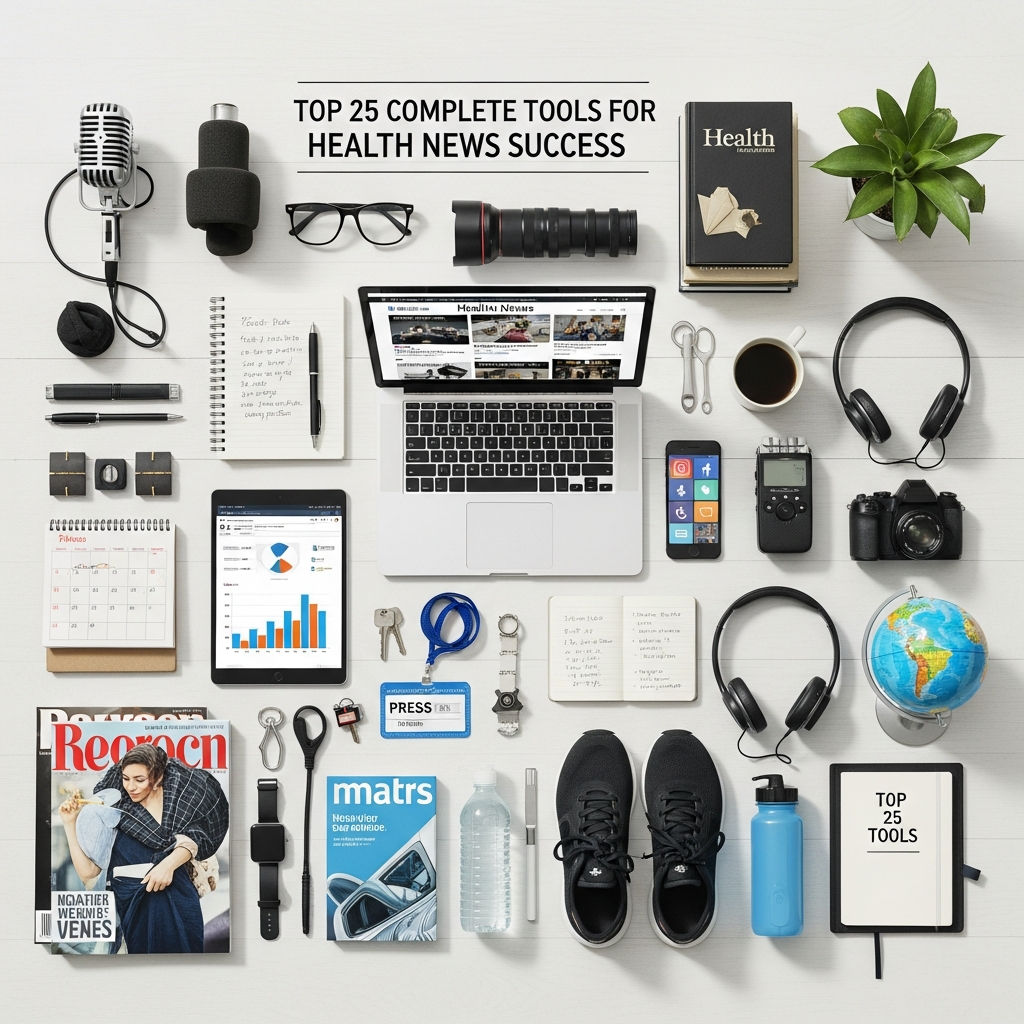
Mastering the Vital Signs of Digital Journalism: Top 25 Complete Tools for Health News Success
In the rapidly evolving landscape of digital media, the health news niche stands out as one of the most challenging yet rewarding sectors. Whether you are a medical journalist, a wellness blogger, or a healthcare communications specialist, “health news success” is defined by two critical factors: accuracy and authority. Because health information falls under Google’s “Your Money or Your Life” (YMYL) category, the stakes for SEO and editorial integrity are incredibly high.
To thrive, you need more than just good writing skills; you need a sophisticated tech stack that helps you find peer-reviewed data, track viral medical trends, and optimize for Search Engine Results Pages (SERPs). Here are the top 25 complete tools for health news success, categorized by their role in your editorial workflow.
Category 1: Research and Evidence-Based Data Tools
The foundation of any successful health news piece is scientific backing. Without credible sources, your content will fail both the reader’s trust test and Google’s E-E-A-T (Experience, Expertise, Authoritativeness, and Trustworthiness) guidelines.
- 1. PubMed: Managed by the National Library of Medicine, this is the gold standard for accessing millions of citations from biomedical literature. It is essential for fact-checking medical claims.
- 2. Google Scholar: A broader tool for finding academic papers, theses, and books. It’s excellent for finding the historical context of a new medical breakthrough.
- 3. The Cochrane Library: Known for high-quality, independent evidence for healthcare decision-making. Their systematic reviews are the “final word” on many clinical trials.
- 4. ClinicalTrials.gov: To report on “what’s coming next,” this database of privately and publicly funded clinical studies conducted around the world is indispensable.
- 5. Statista: When you need a chart or a hard number regarding healthcare market trends or disease prevalence, Statista provides verified data visualizations.
Category 2: Trend Discovery and News Monitoring
In health news, being first is great, but being first with the right context is better. These tools help you spot emerging viruses, wellness fads, or policy changes before they go mainstream.
- 6. Google Trends: Vital for seeing what health symptoms or medications people are searching for in real-time. It helps you pivot your content to meet current public interest.
- 7. BuzzSumo: This tool allows you to see which health stories are generating the most engagement on social media. It’s perfect for analyzing what types of headlines resonate with your audience.
- 8. Feedly: An RSS aggregator that lets you follow hundreds of medical journals and health news outlets in one dashboard, ensuring you never miss a press release.
- 9. Exploding Topics: This tool uses AI to identify rapidly growing trends months before they peak. It’s excellent for finding “under-the-radar” wellness movements.
- 10. Talkwalker Alerts: A more robust alternative to Google Alerts, Talkwalker monitors the web and social media for mentions of specific medical terms or competitors.
Category 3: SEO and Keyword Strategy for YMYL
SEO for health news is unique. You aren’t just looking for high volume; you are looking for “search intent” that matches medical queries. These tools ensure your news is discoverable.
- 11. SEMrush: A comprehensive suite for keyword research. Use its “Keyword Magic Tool” to find long-tail questions patients are asking (e.g., “Side effects of [Drug Name]”).
- 12. Ahrefs: Exceptional for backlink analysis. In health news, getting links from .edu and .gov sites is crucial, and Ahrefs helps you identify those opportunities.
- 13. AnswerThePublic: This tool visualizes search questions. For health news, it helps you structure your articles into a “Frequently Asked Questions” format, which often wins Featured Snippets.
- 14. SurferSEO: An on-page optimization tool that analyzes top-ranking health articles and tells you exactly which keywords and headings you need to include to compete.
- 15. Google Search Console: The most direct way to see how Google views your site. Use it to monitor “Core Web Vitals,” which are a significant ranking factor for news sites.
Category 4: Content Creation and Medical Accuracy
Writing about health requires precision. A single typo in a dosage or a misinterpreted study result can have real-world consequences.
- 16. Grammarly (with Medical Dictionary): While basic Grammarly is great, its ability to recognize complex medical terminology helps prevent embarrassing spelling errors in scientific names.
- 17. Hemingway Editor: Medical writing can often become too dense. Hemingway helps you strip away jargon and keep your health news accessible to a layperson’s reading level.
- 18. Canva: Infographics are essential for explaining complex biological processes. Canva offers medical-specific templates for illustrating things like the “Benefits of Vitamin D.”
- 19. BioRender: For high-end health publications, BioRender allows you to create professional, science-standard illustrations of cells, pathways, and anatomy.
- 20. FactCheck.org (SciCheck): A specialized wing of FactCheck that focuses specifically on debunking false scientific and medical claims circulating online.
Category 5: Distribution and Audience Engagement
Once your health news is published, you need to get it in front of the right eyes—be it healthcare professionals or patients.
- 21. Mailchimp: Email newsletters are the lifeblood of health news. Building a list of loyal readers allows you to bypass algorithm changes and deliver news directly to inboxes.
- 22. Hootsuite: Use this to schedule your health news updates across Twitter (X), LinkedIn, and Facebook. LinkedIn is particularly effective for reaching the B2B healthcare sector.
- 23. Substack: Many independent health journalists use Substack to build a paid subscription model for “deep dive” investigative medical reporting.
- 24. Google Analytics 4 (GA4): Essential for understanding user behavior. Do readers drop off when your medical articles get too technical? GA4 helps you find the “sweet spot” of engagement.
- 25. HARO (Help A Reporter Out) / Connectively: To gain authority, you need quotes from MDs and PhDs. This tool connects you with medical experts willing to provide commentary for your stories.
Conclusion: Building Your Health News Ecosystem
Success in the health news sector is a marathon, not a sprint. By integrating these 25 tools into your daily workflow, you address the three pillars of digital journalism: Discovery, Verification, and Distribution.
Start by prioritizing your research tools (like PubMed) to ensure your content is unassailable. Then, layer on SEO tools (like SEMrush) to ensure your hard work actually reaches the people who need that information. In the world of health news, being a trusted source is your most valuable asset—and these tools are the keys to building and maintaining that trust.
“`